SW — HM
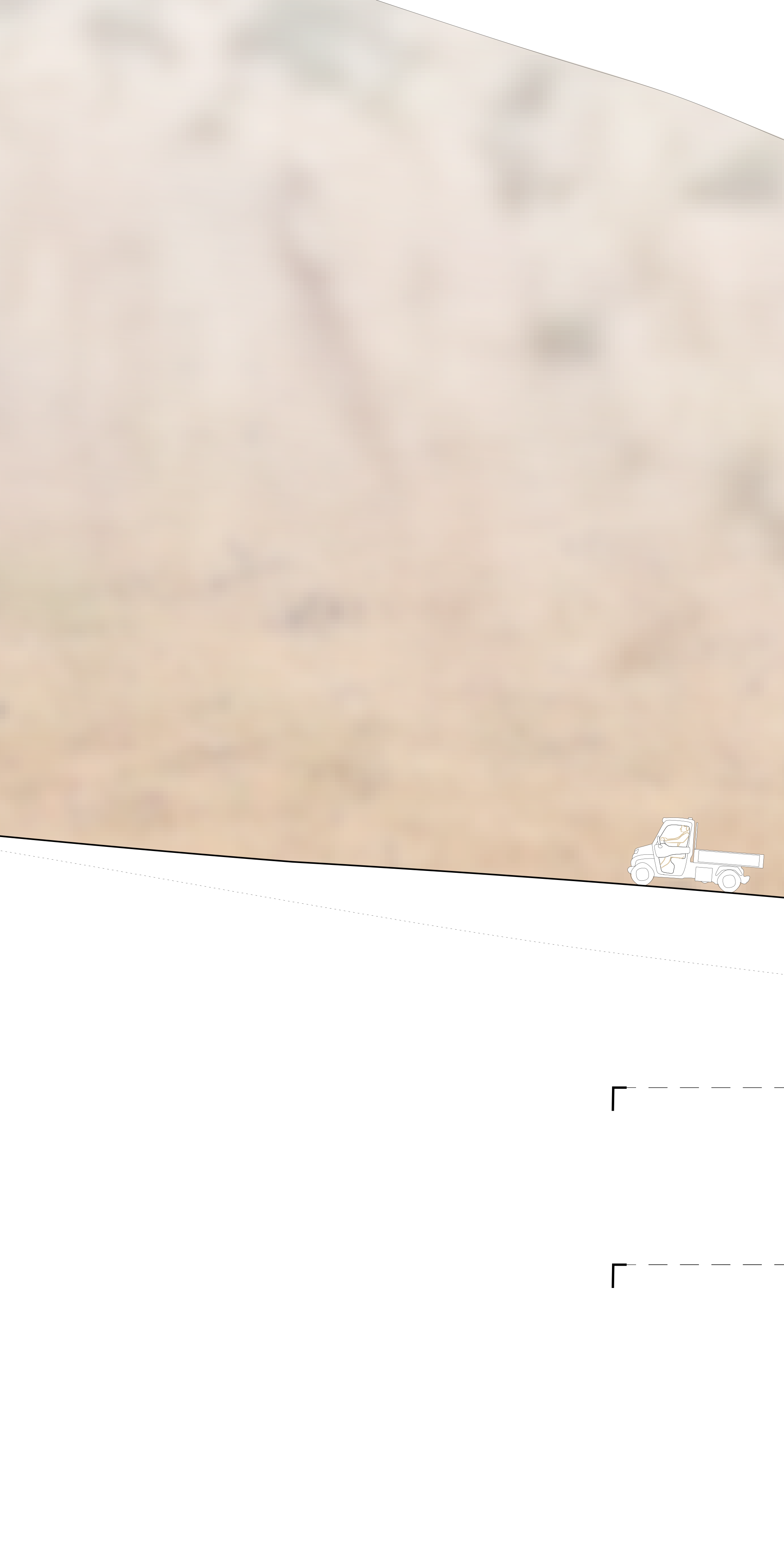
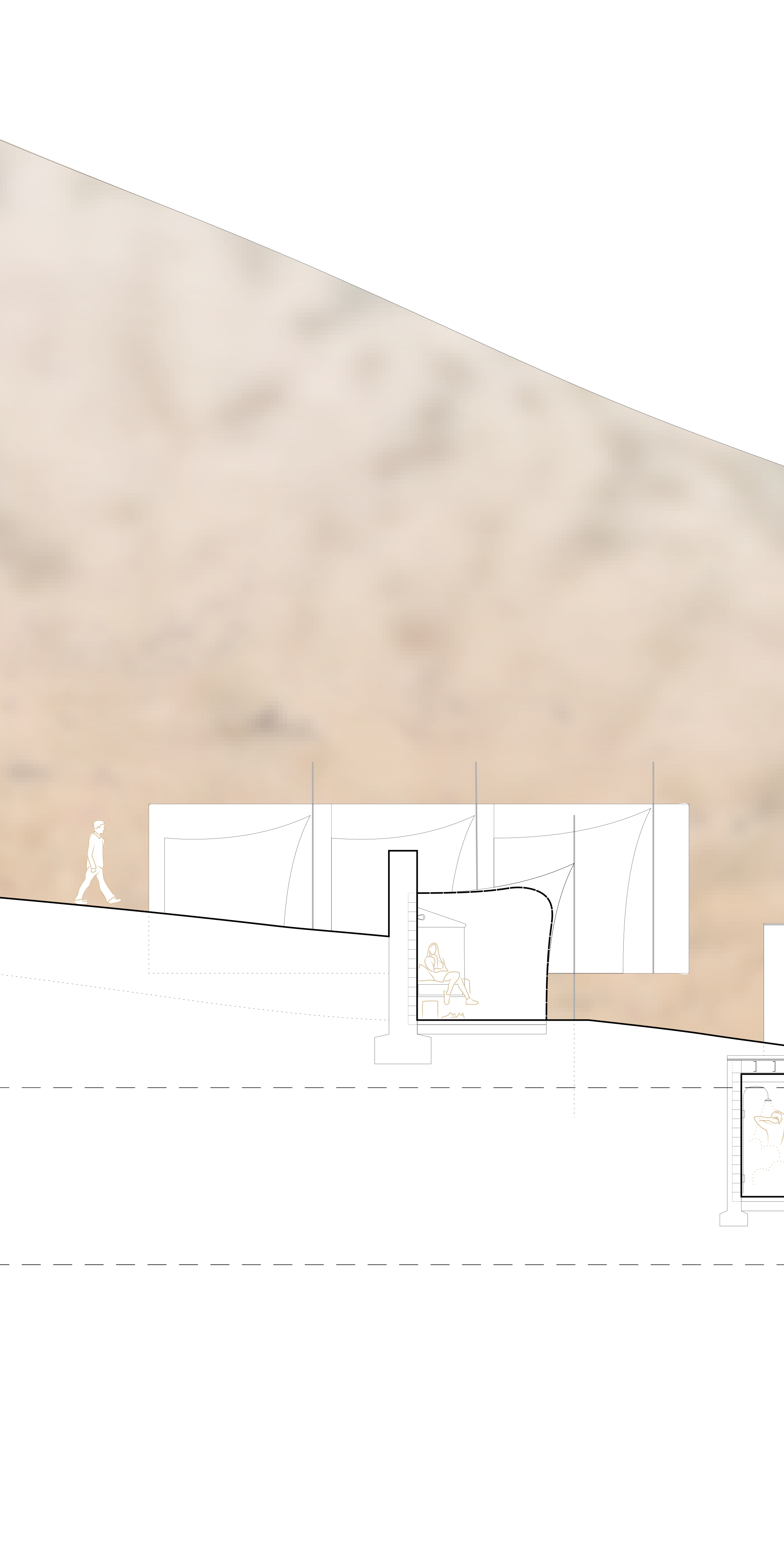
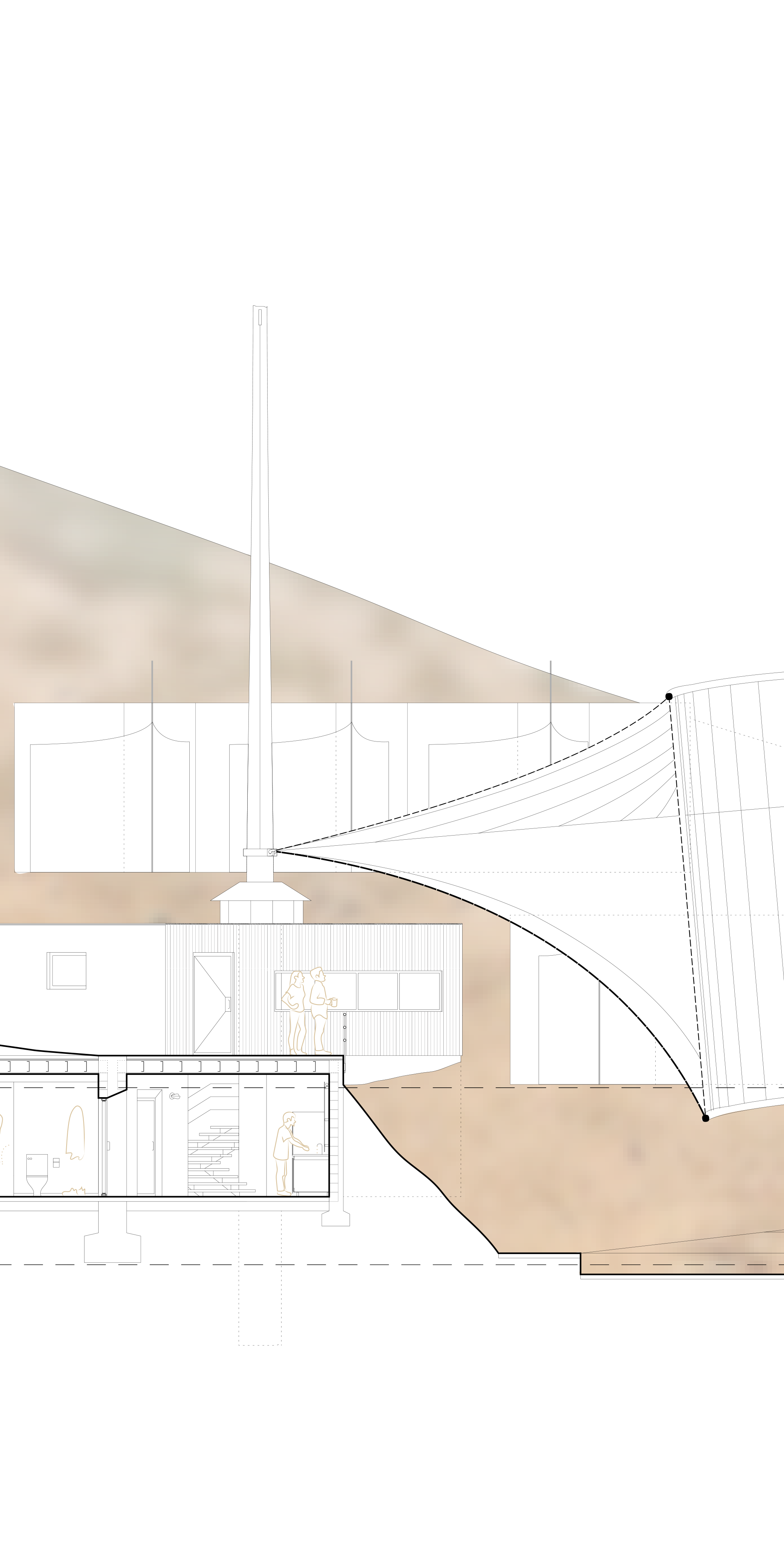
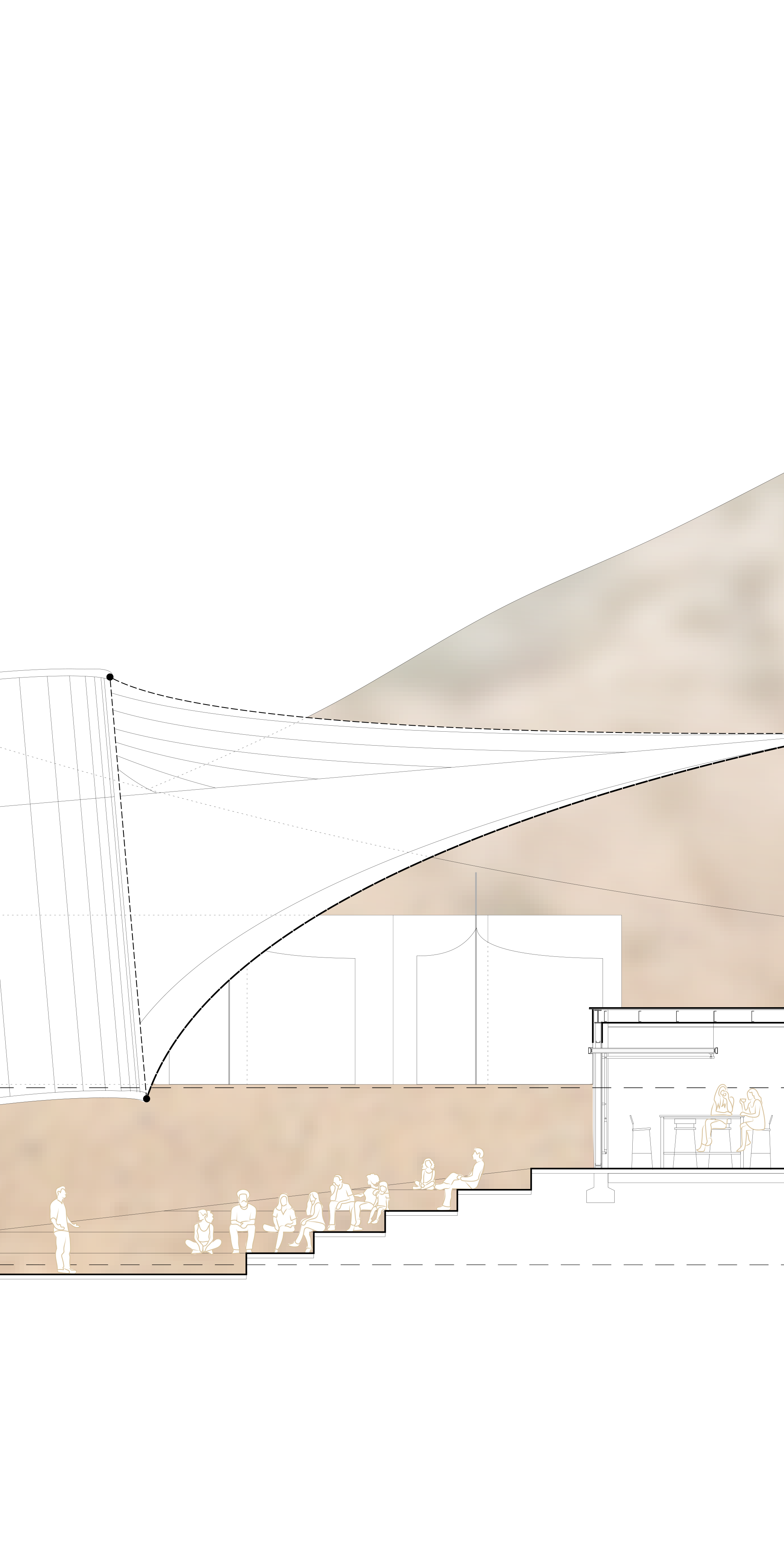
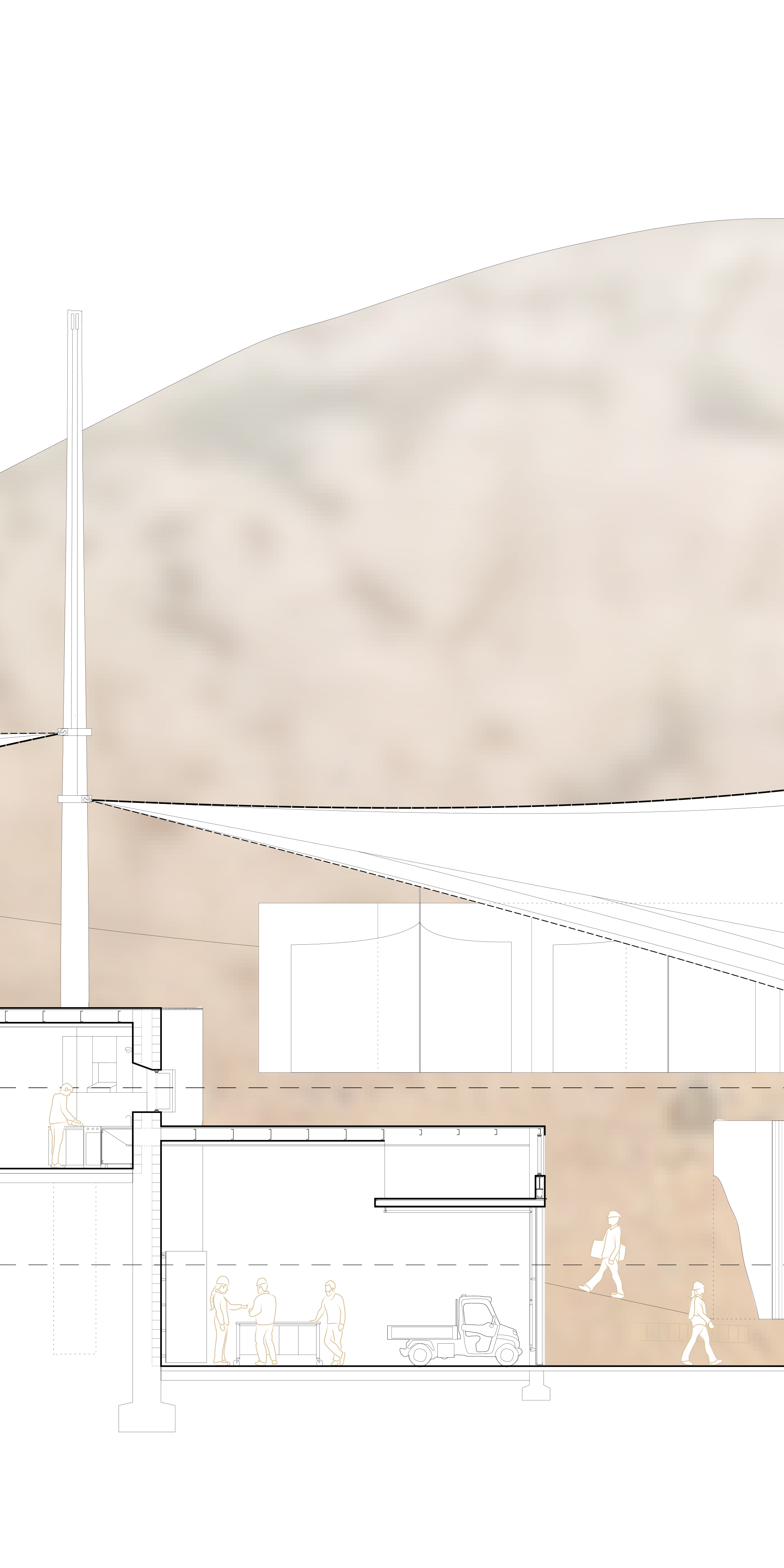
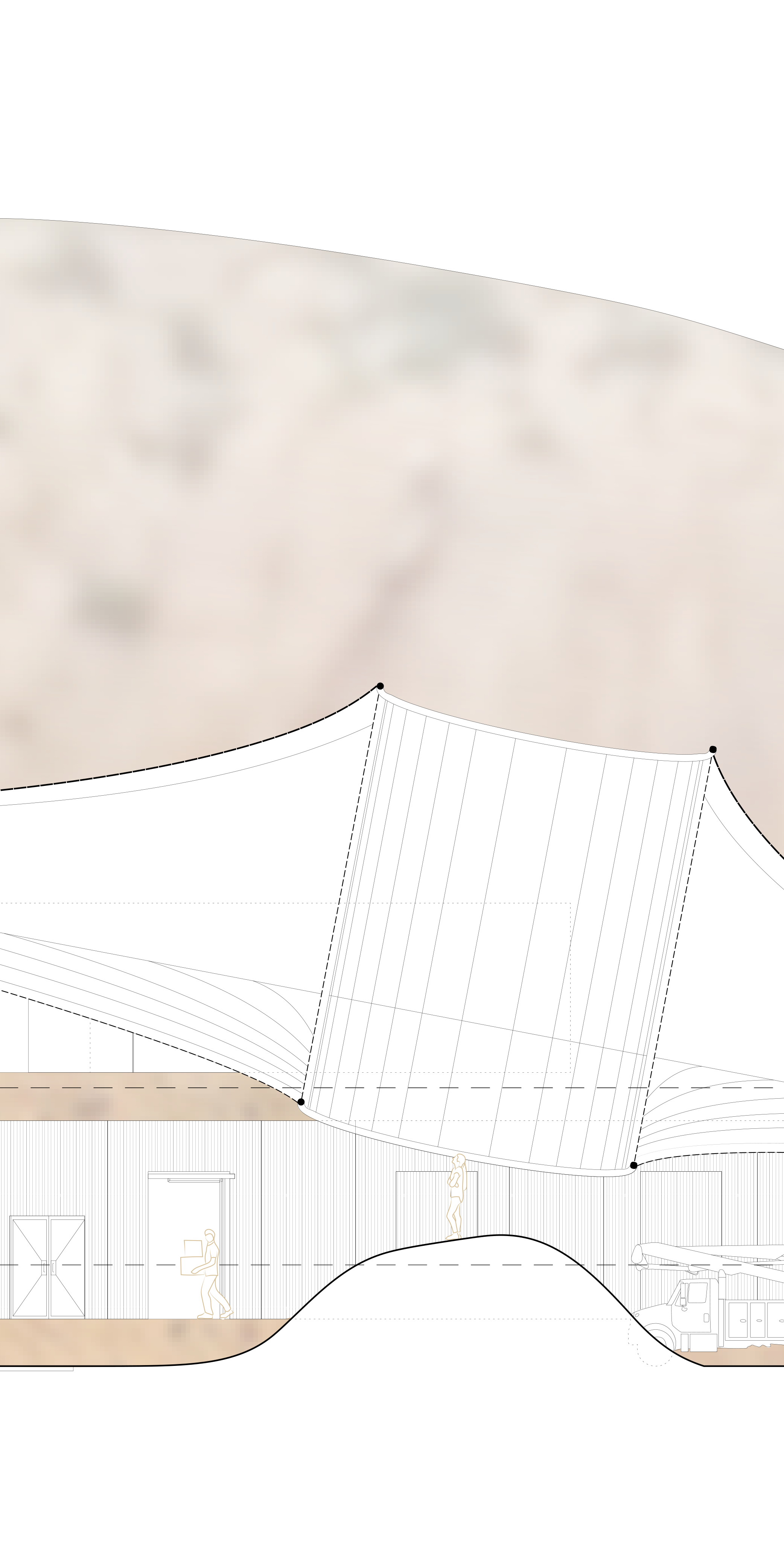
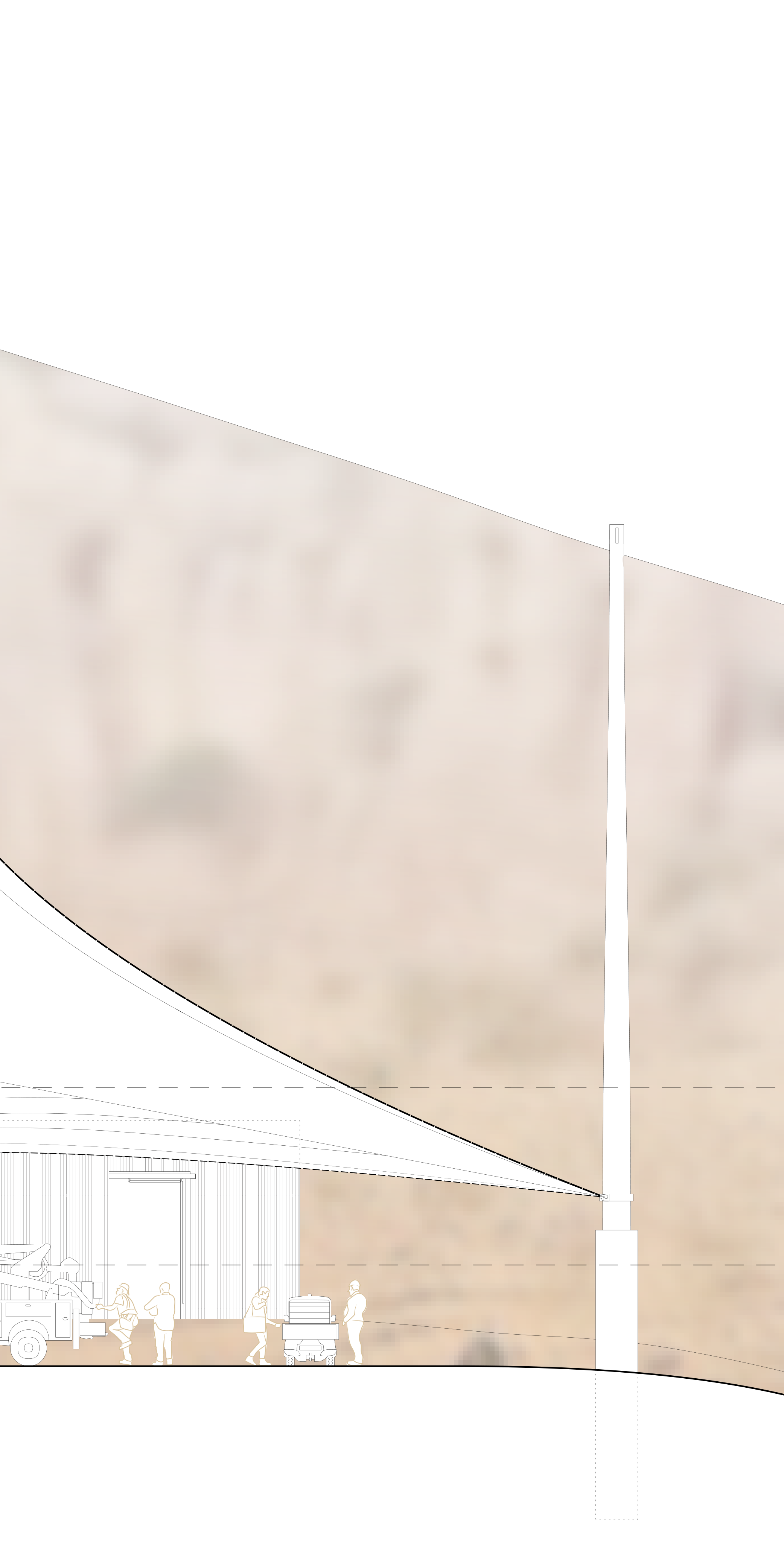
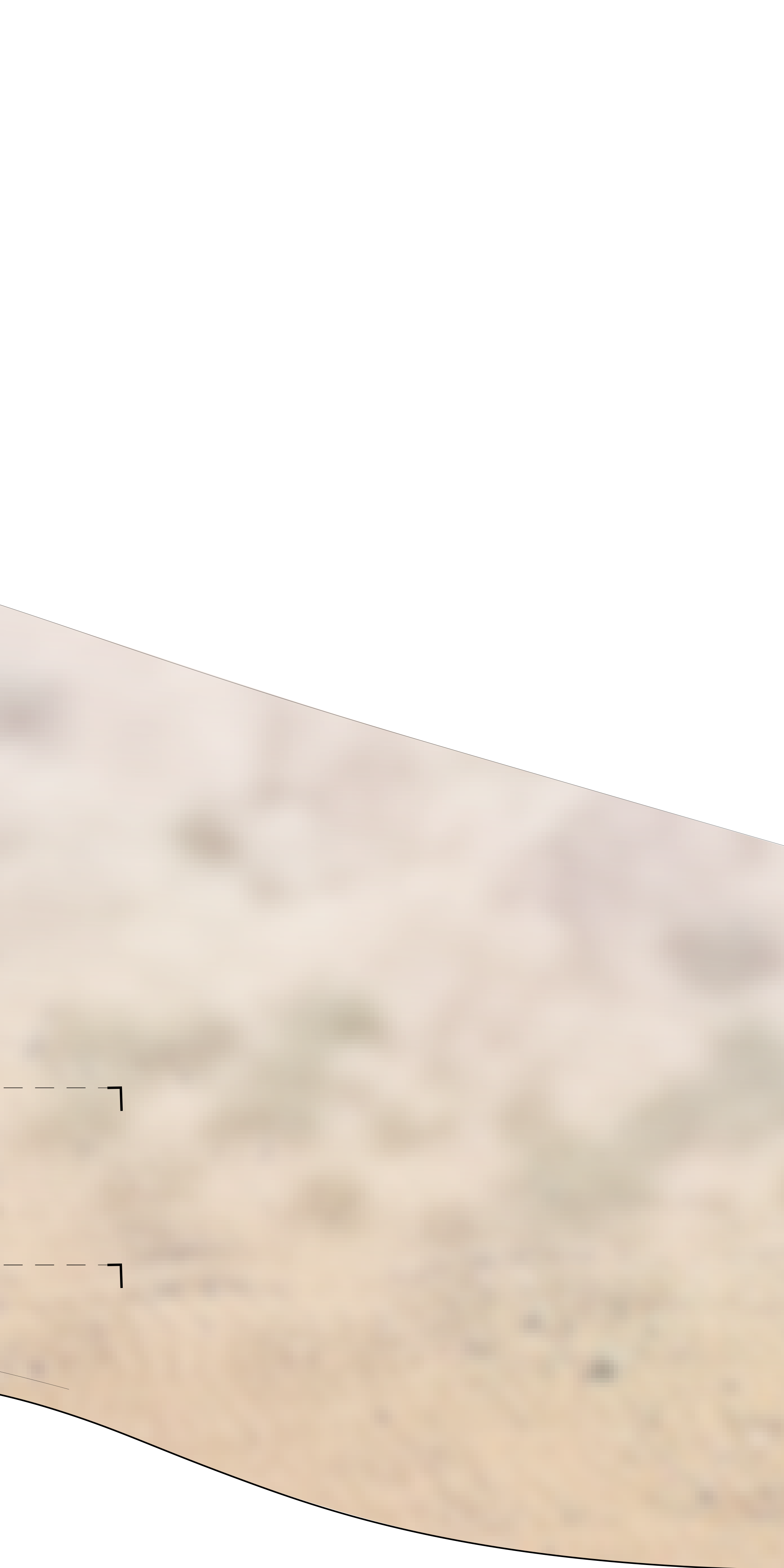
(Above) Long section cuts through both staging areas. Click to zoom.
Basecamp + Theater Residency
third undergraduate studio
with Assoc. Prof. Christian Unverzagt
This basecamp is intended to first serve a hypothetical WPA-style effort towards total electrification of the power grid in Bisbee, AZ. Once accomplished, the campus is designed to transform into a theatrical residency, at which cast and crew can live and perform.
The staircase that leads up to the kitchens wraps a massive post that anchors one corner of the canopy pictured.
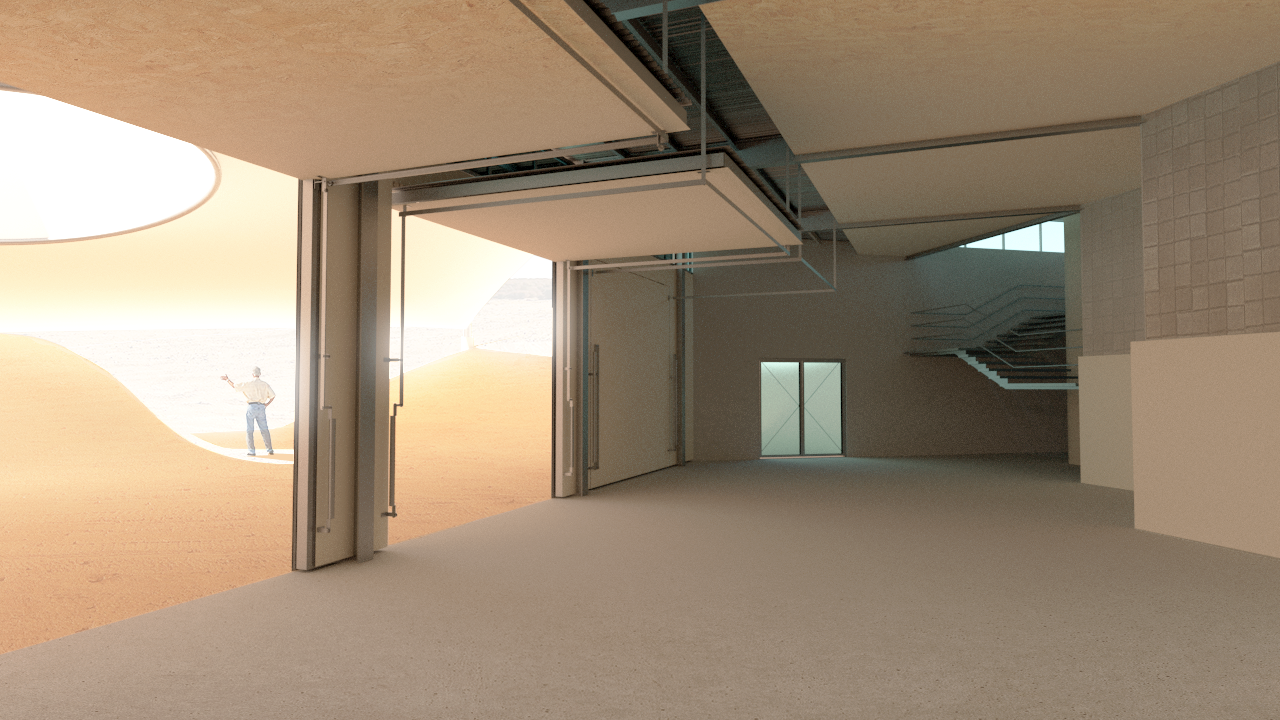
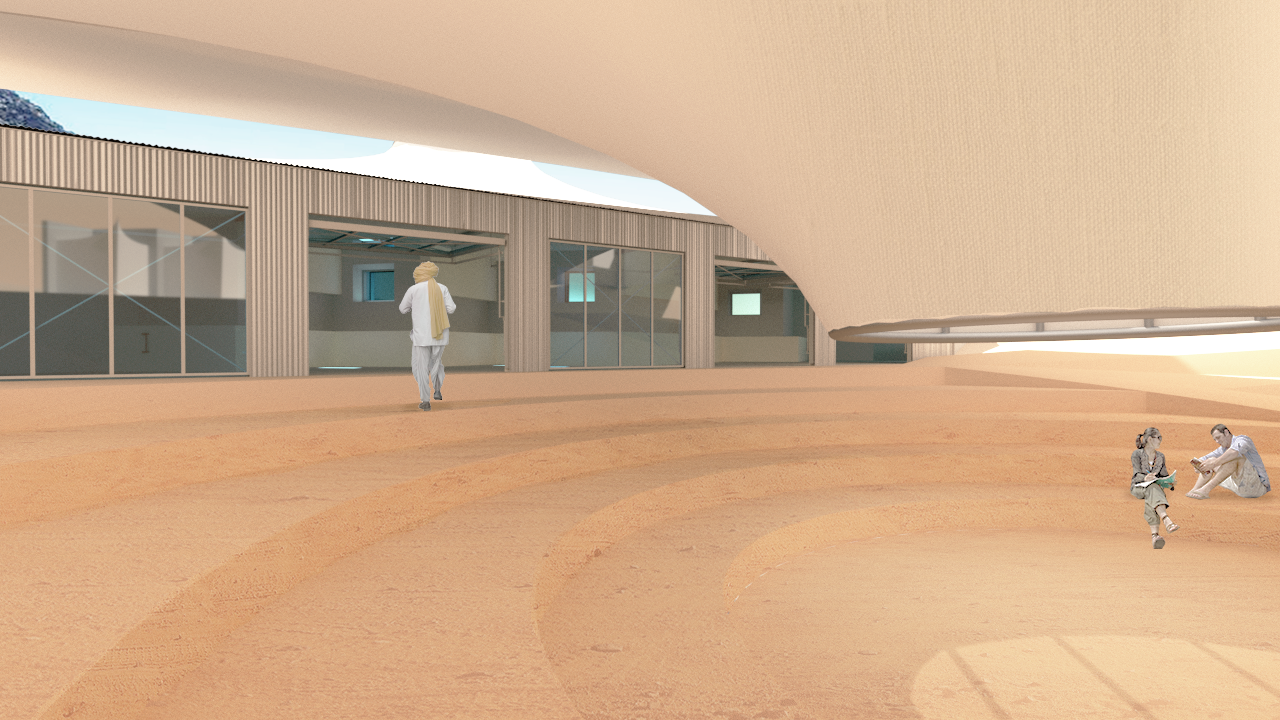
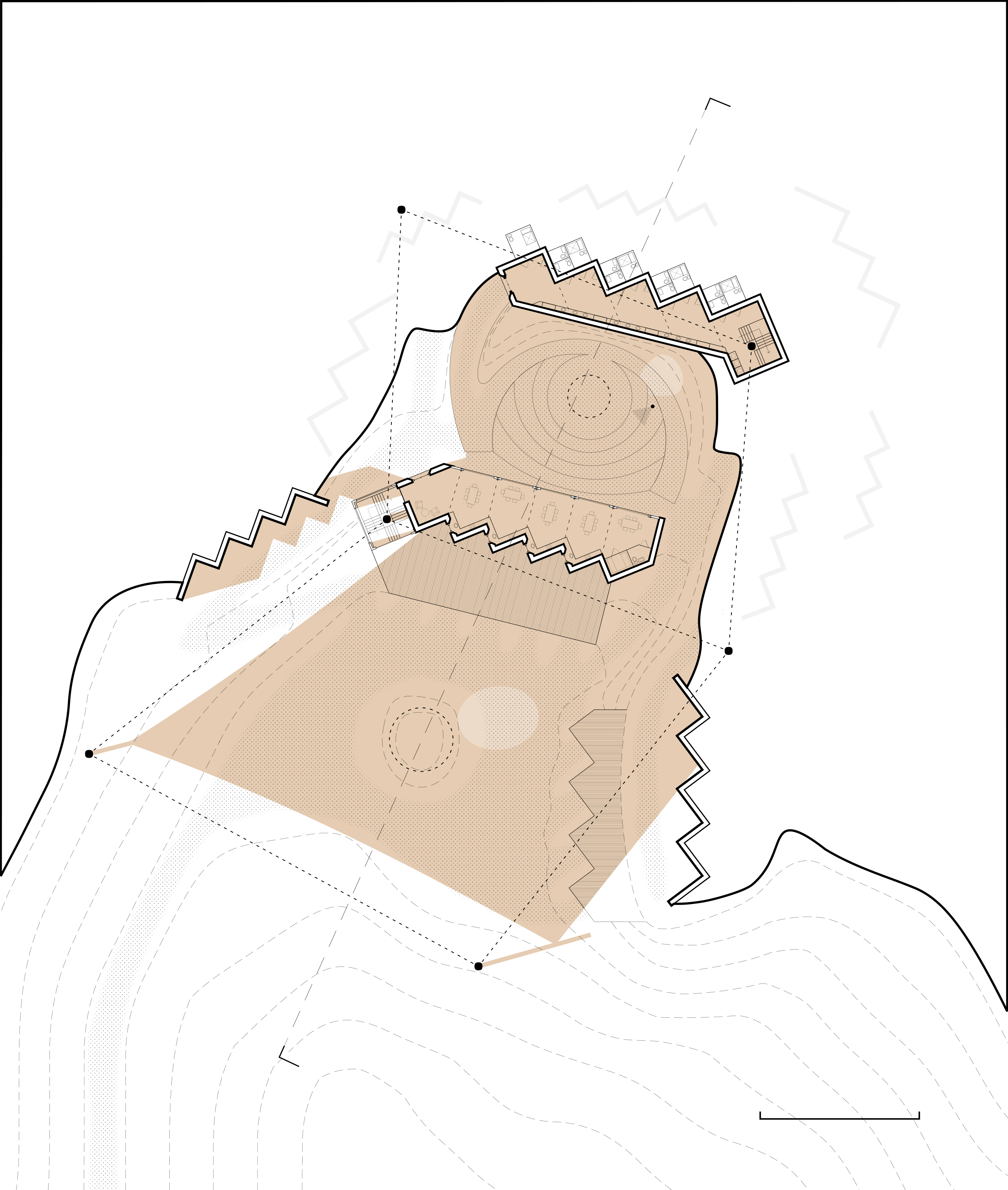
The program is split into two “staging areas” - the amphitheatre to the north and the workshop to the south. Both are protected from the scorching Arizona sun by canopies, around which the individual living units are organized.
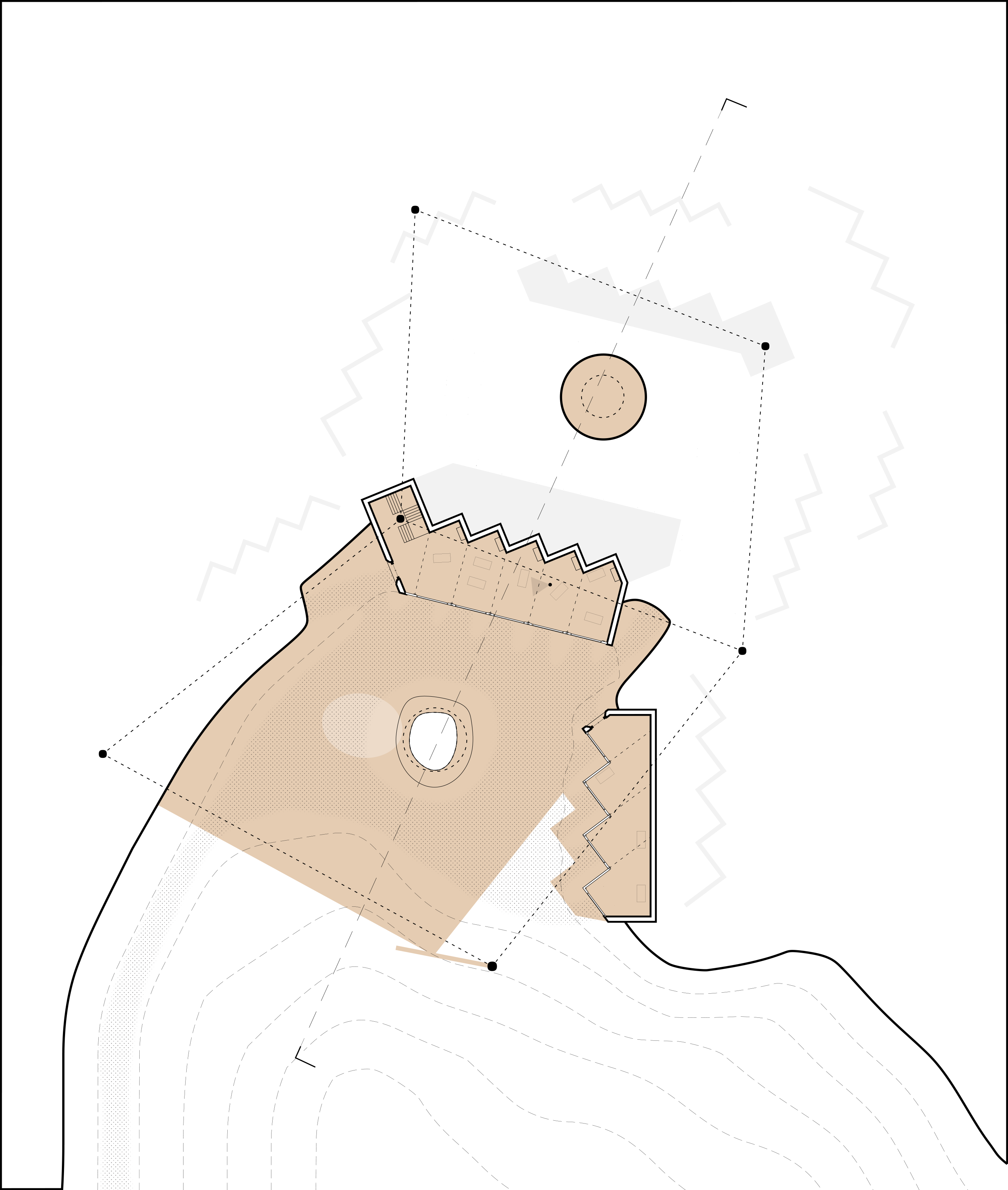
(Above left) Lower plan in the morning.
(Above right) Upper plan in the afternoon. Bar represents 60 ft.
(Above right) Upper plan in the afternoon. Bar represents 60 ft.
The canopies that encompass the staging areas have two layers: a mesh and a canvas with a barrel-shaped frame suspended between them. The oculus it creates illuminates the center stage, but the layering prevents the AZ sun from beating down at all hours of the day.
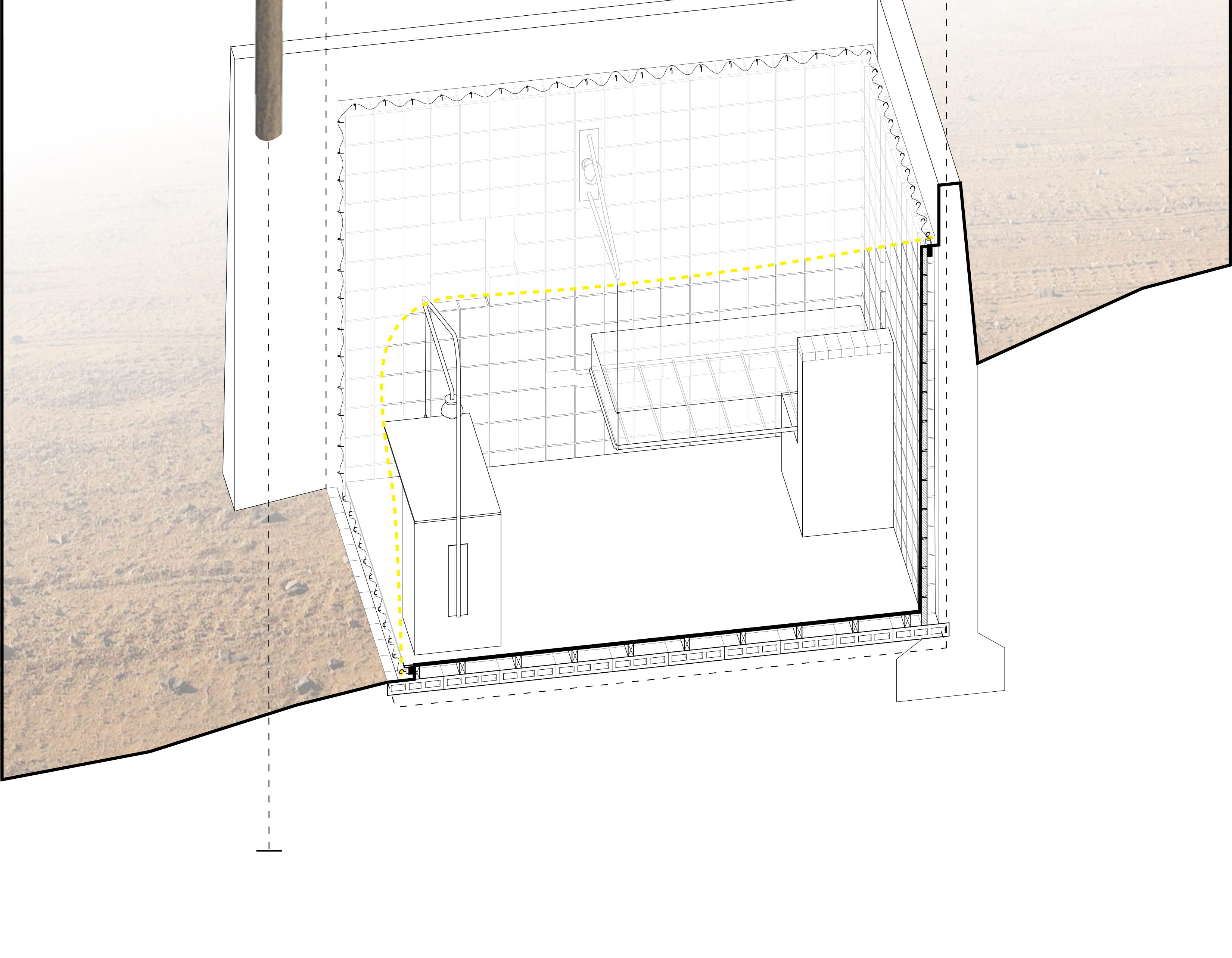
The hybrid drawing, which features a hand-sewn and soldered physical model, depicts one of the staging areas and its canopy. The stair down to the restrooms encircles another post.
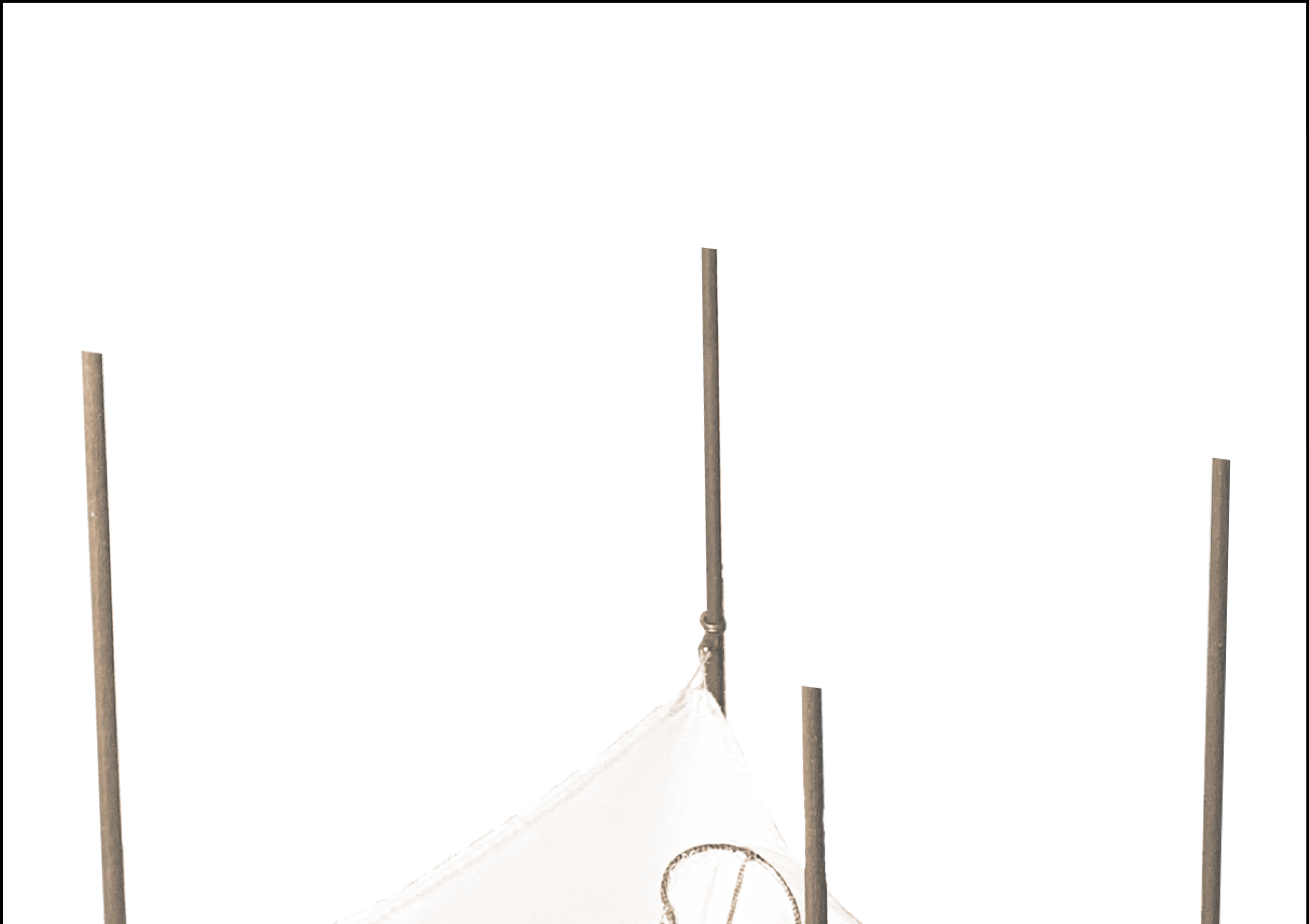
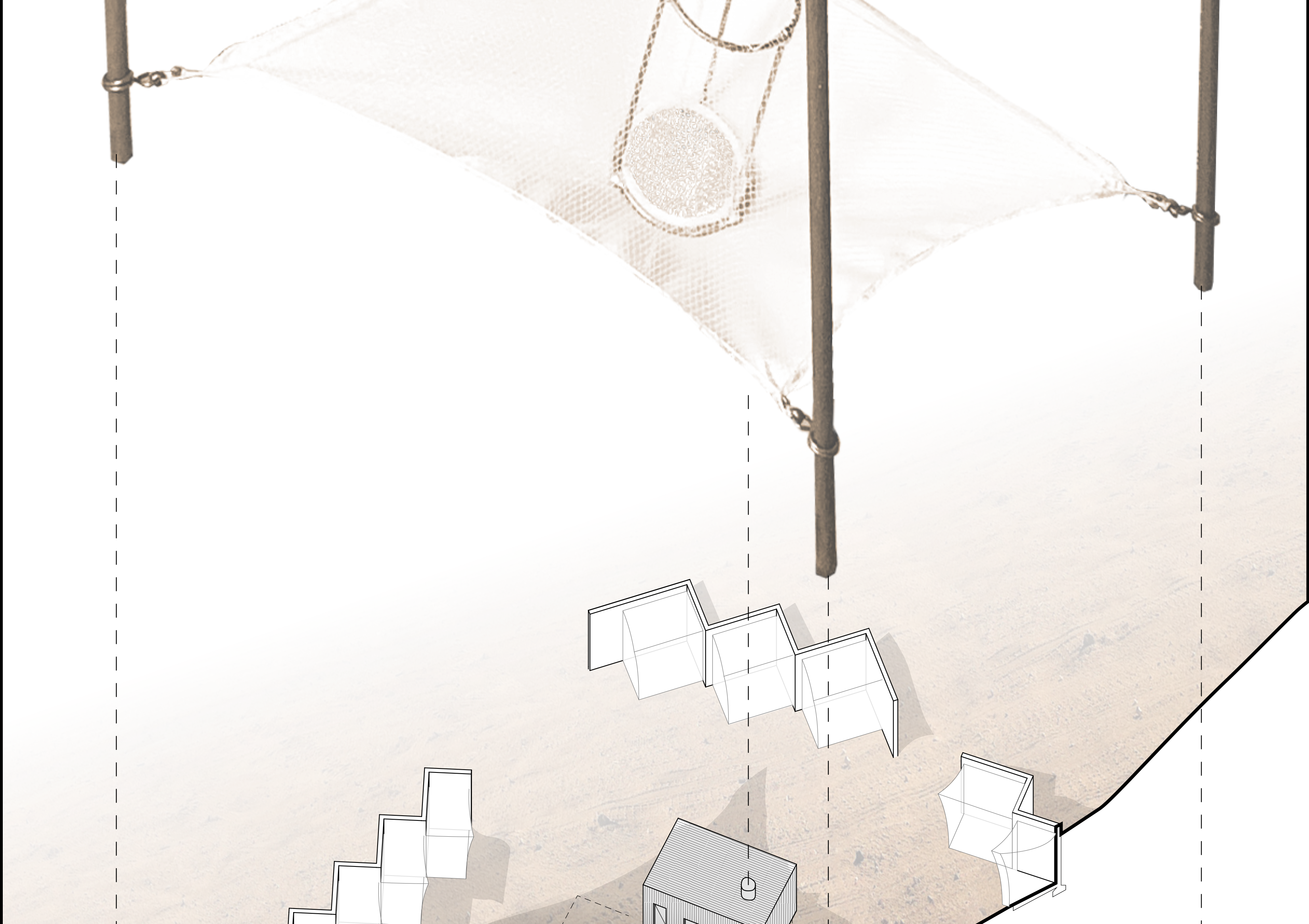
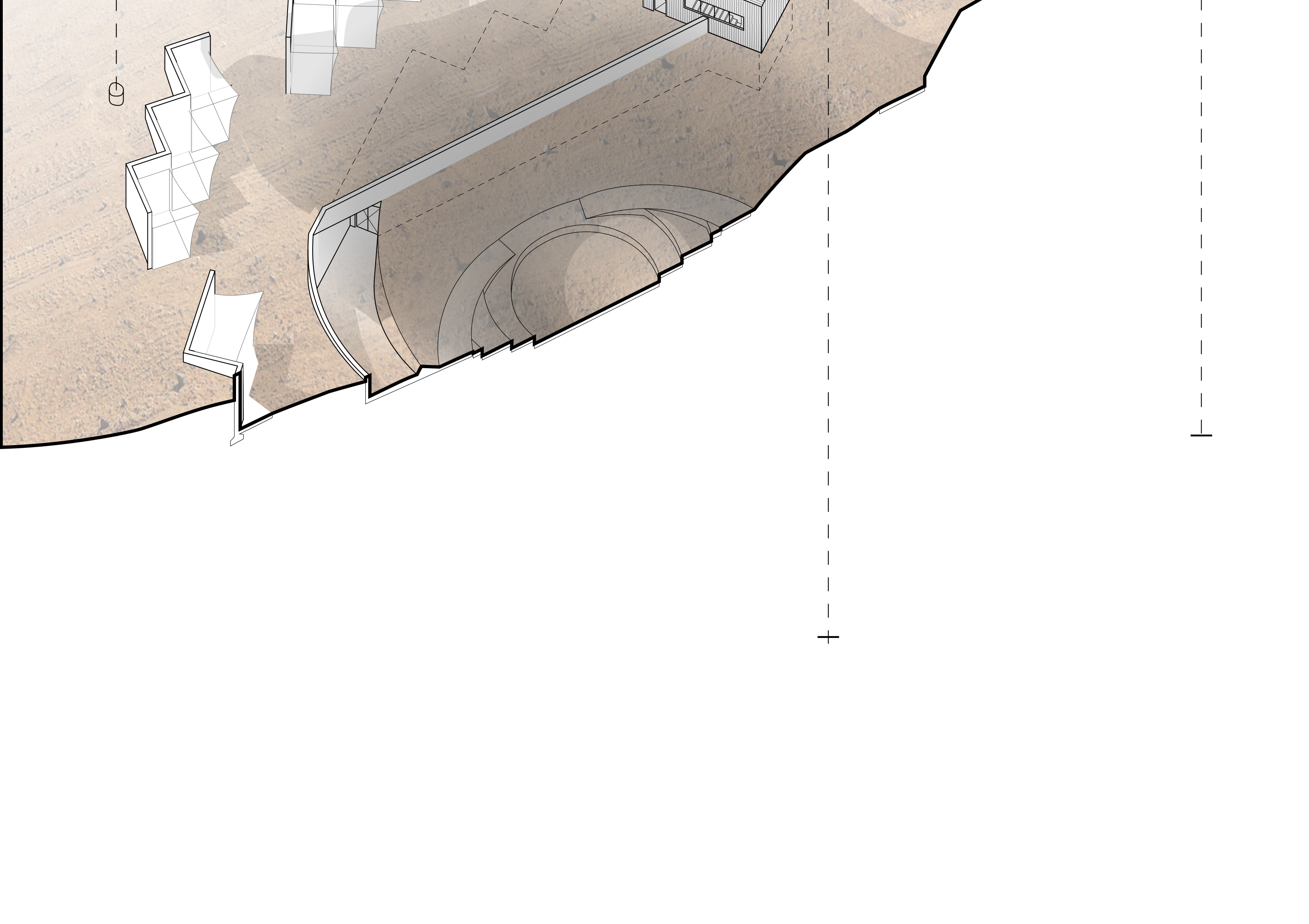
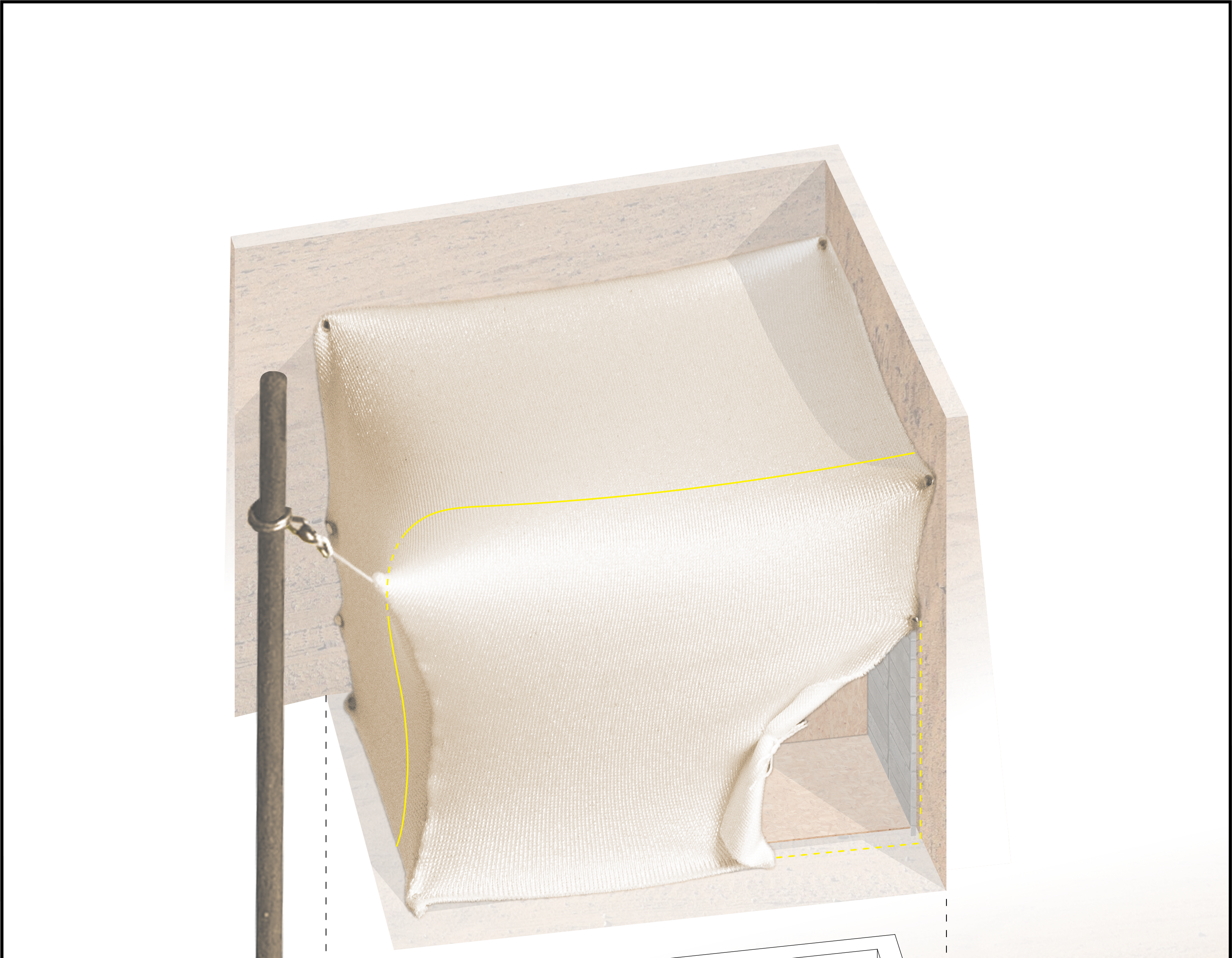
This drawing also includes a photo of a hand-sewn model
to approximate the tensile form
of the individual living units, made of CMU, composite plywood, rammed earth, and treated canvas.
Staging Camp is inspired by the experience of sharing stories around a campfire. The hearth becomes a place of performance, which is a powerful combination for fostering connection and understanding between people. That kind of camaraderie becomes particularly important when contending with something as politicized and controversial as energy consumption, which the hypothetical WPA-2.0 program directly addresses.
(Below)The basecamp kitchen overlooks the amphitheatre space.
02 mo., fall 2020