SW — HM
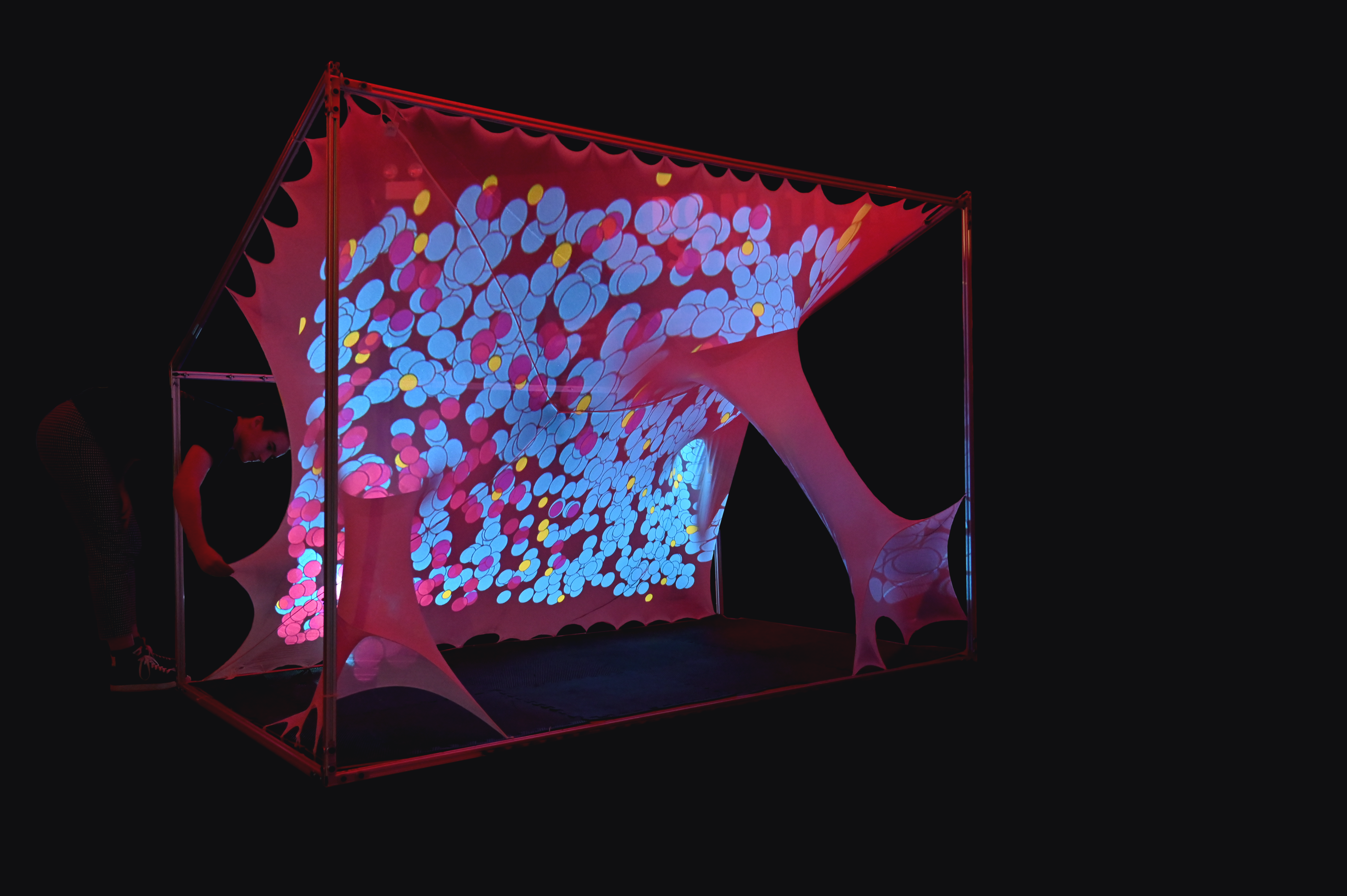
(Above) Photo courtesy of Karan Nashine.
Tensile architecture + ASD-centered engagement
as a part of ARCH409: ENGAGE collaborative course
with Assoc. Prof. Sean Ahlquist
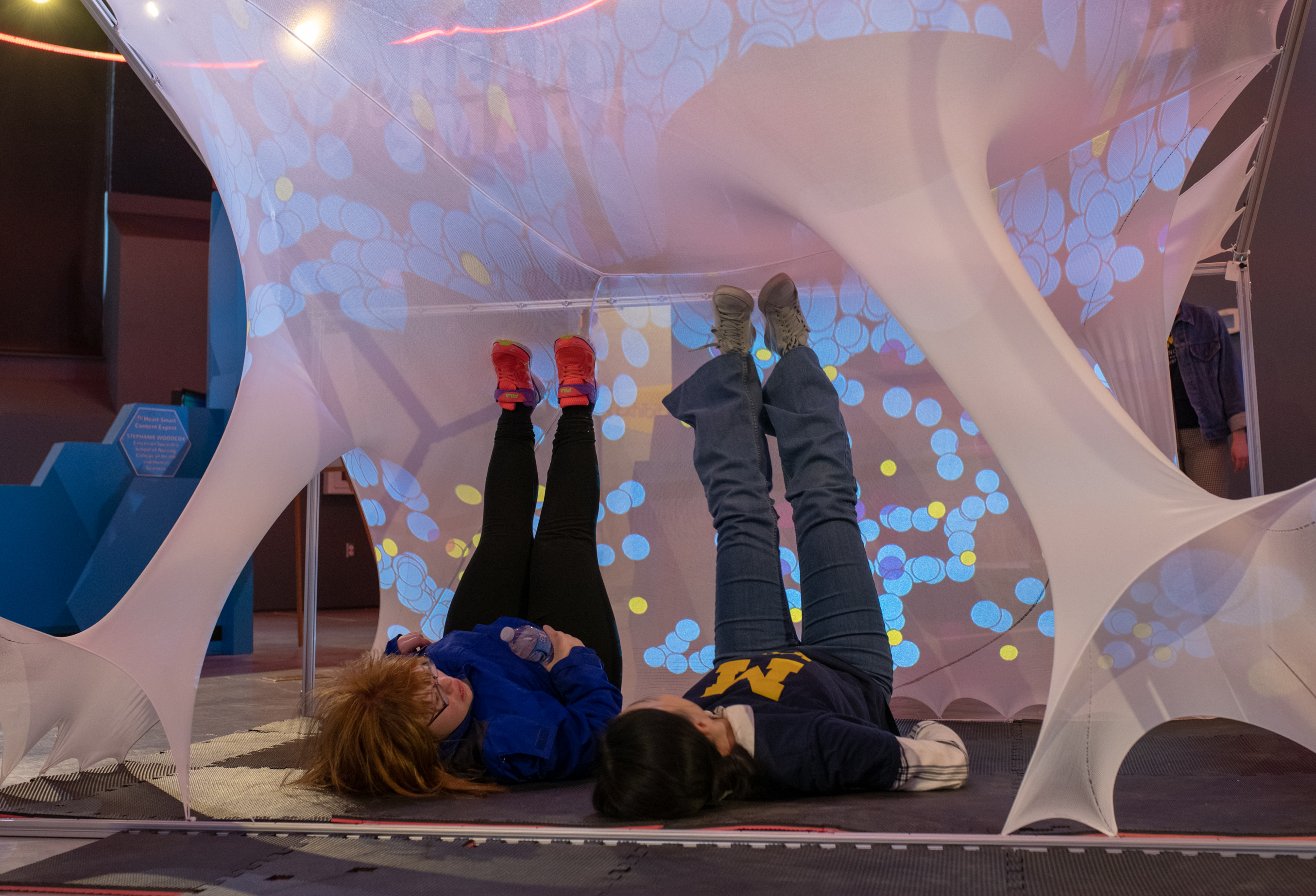
A continuation and exploration of Sean Ahlquist’s research and design work, my teammates and I designed and crafted a textile playscape to host an interactive digital interface under his tutelage.
Photo courtesy of Karan Nashine.
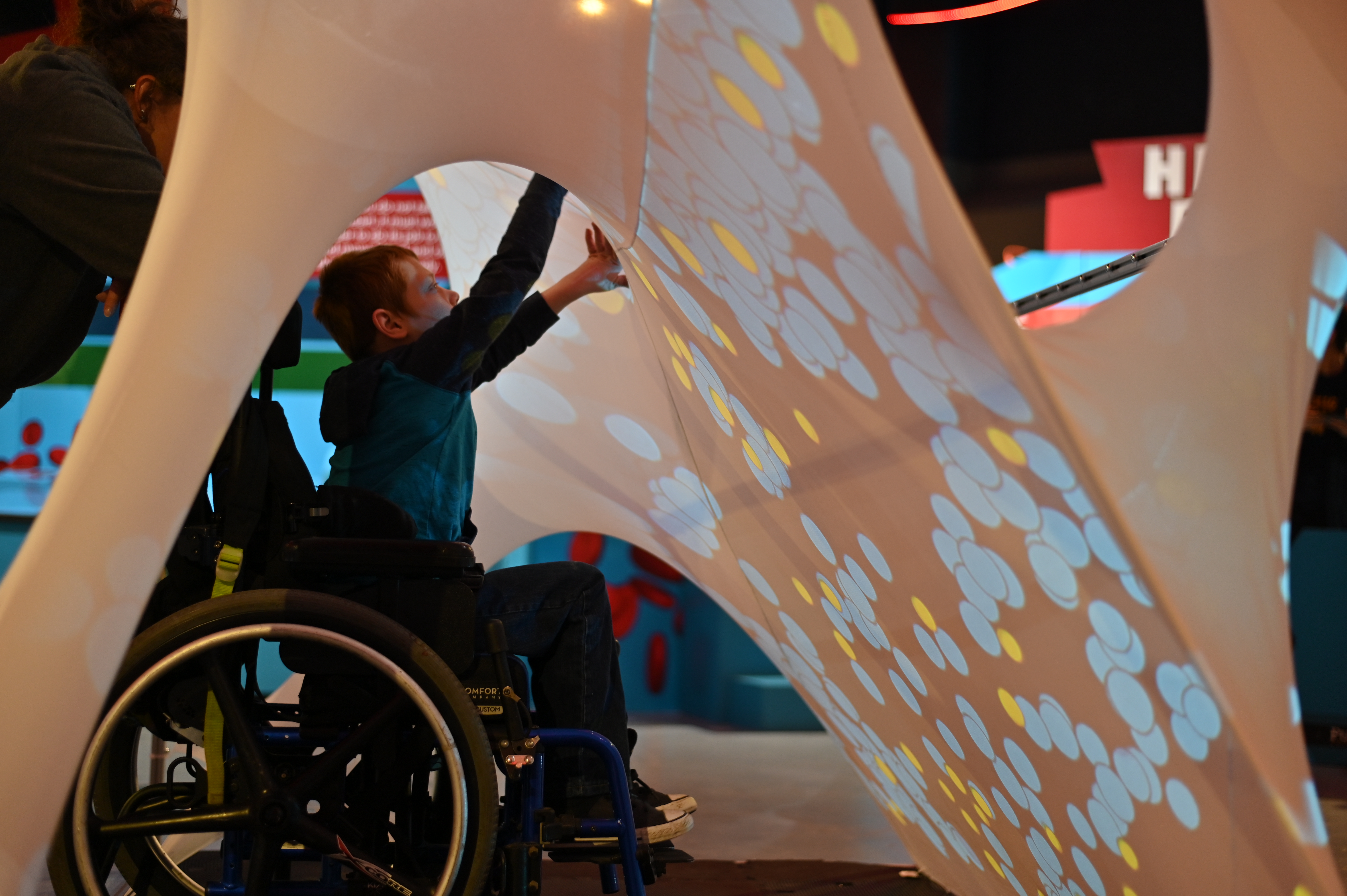
Both the physical structure and the digital interaction were designed to foster engagement with children who are on the Autism Spectrum, many of whom experience sensitivities to light or touch. To close out the project, our class took the Playscape to a children’s museum during an event geared toward neurodivergent children.
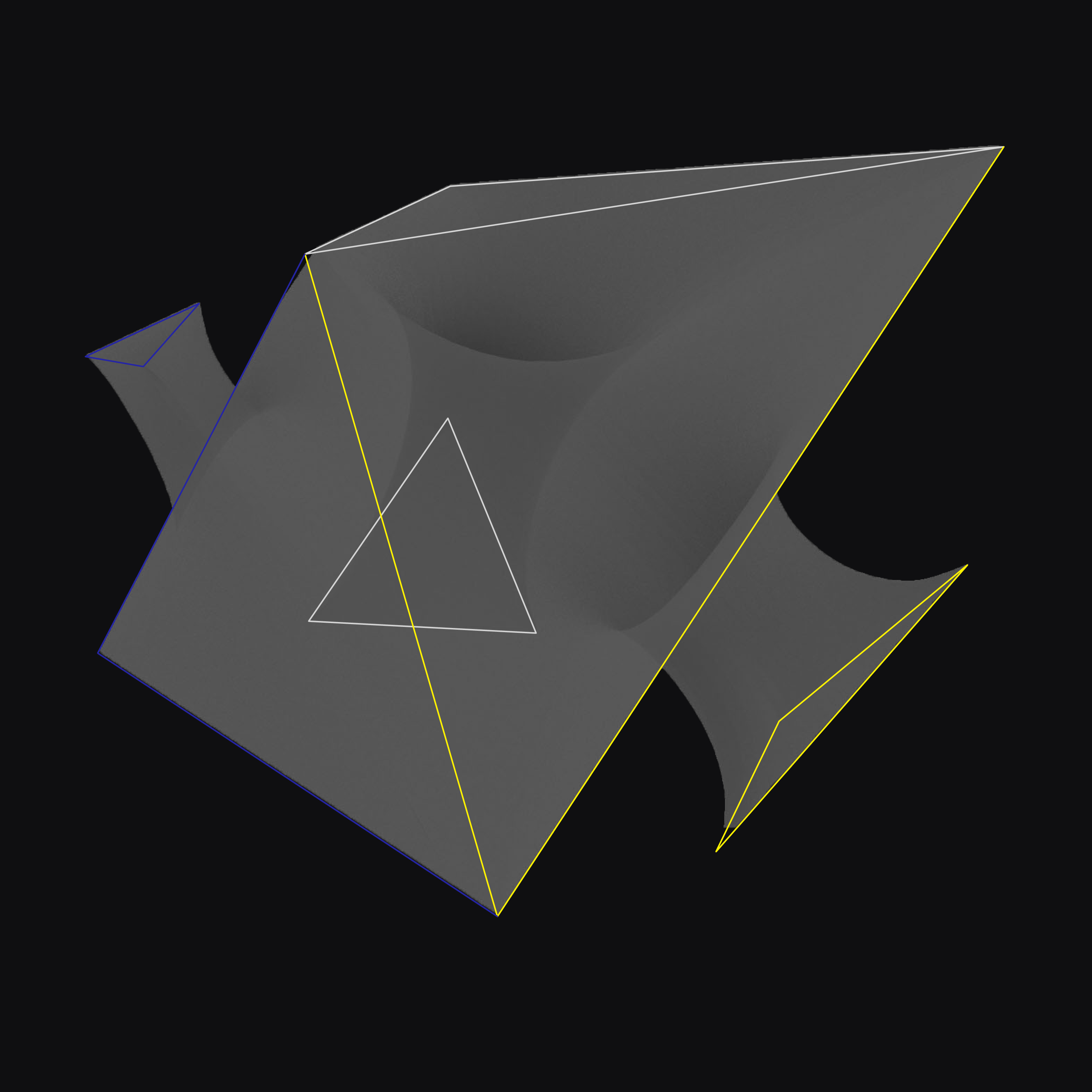
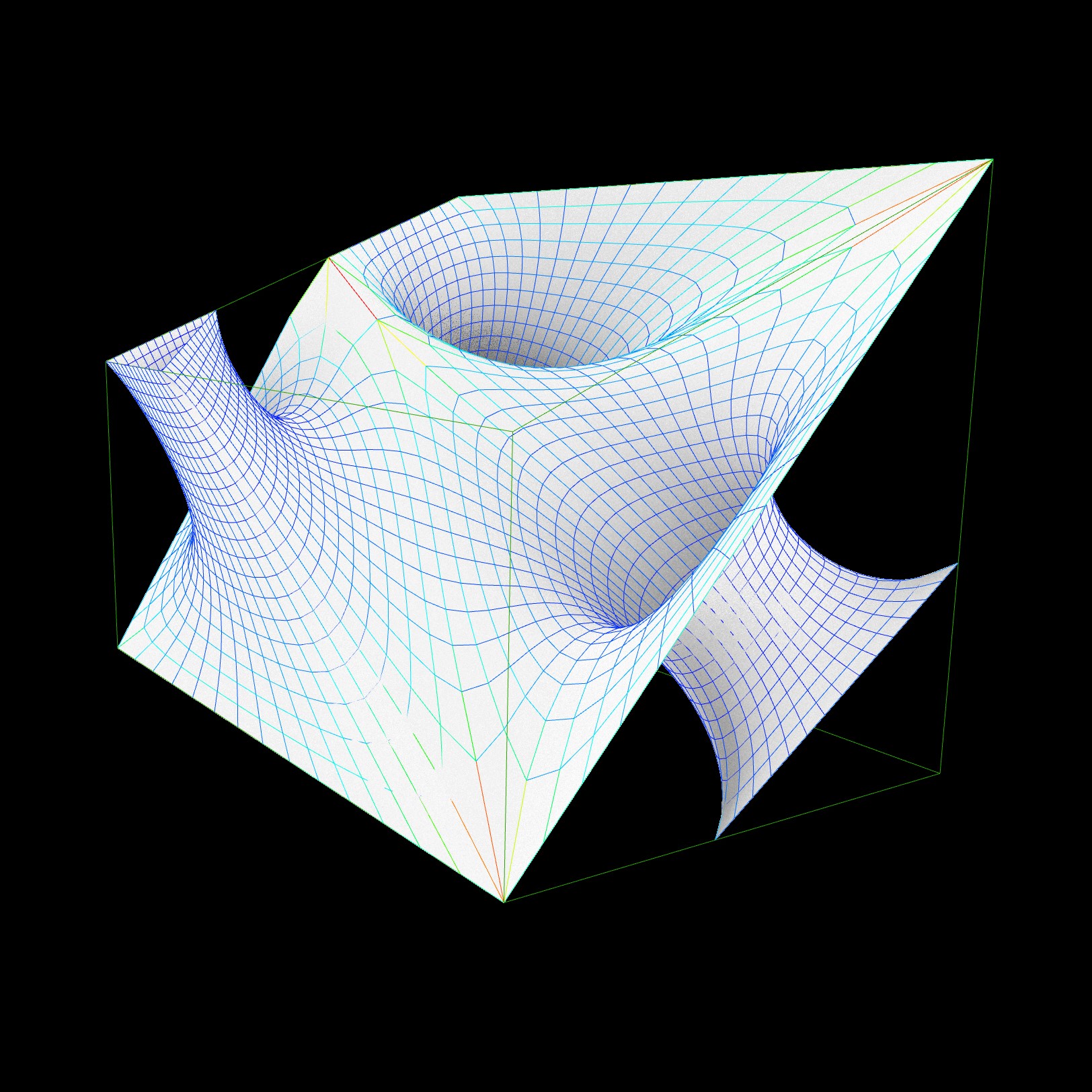
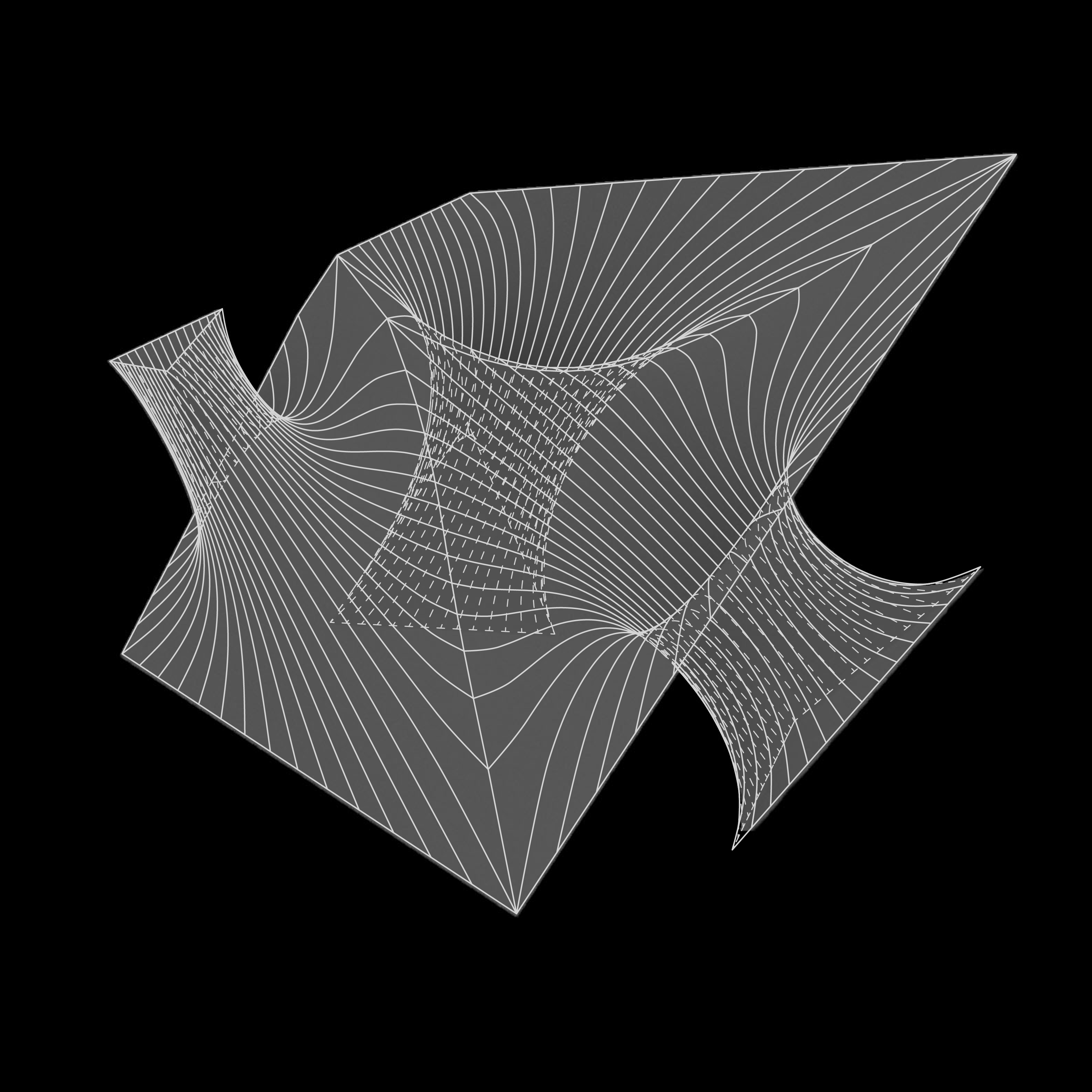
(Above) Frame model, stress model, surfaces model.
After a lengthy iteration period, the finalized “frames” that bound the knitted cylinders are modeled and oriented in Rhino. A Java script program created by Sean Ahlquist, Springform Processing, simulates the knitted textile in 3D space, dictated by the frames pictured. After adjusting the cylinders’ tension to the desired degree, the resulting linework is used to create pixel maps, like the one below, which instruct the knitting machine.
Pixel maps courtesy of Yingying Zeng and
Tracey Weisman, 3D knitting experts.

Each pixel corresponds to a single stitch in the textile, the color indicates the style of the stitch, and the formatting tells the machine to make a tube or a plane.
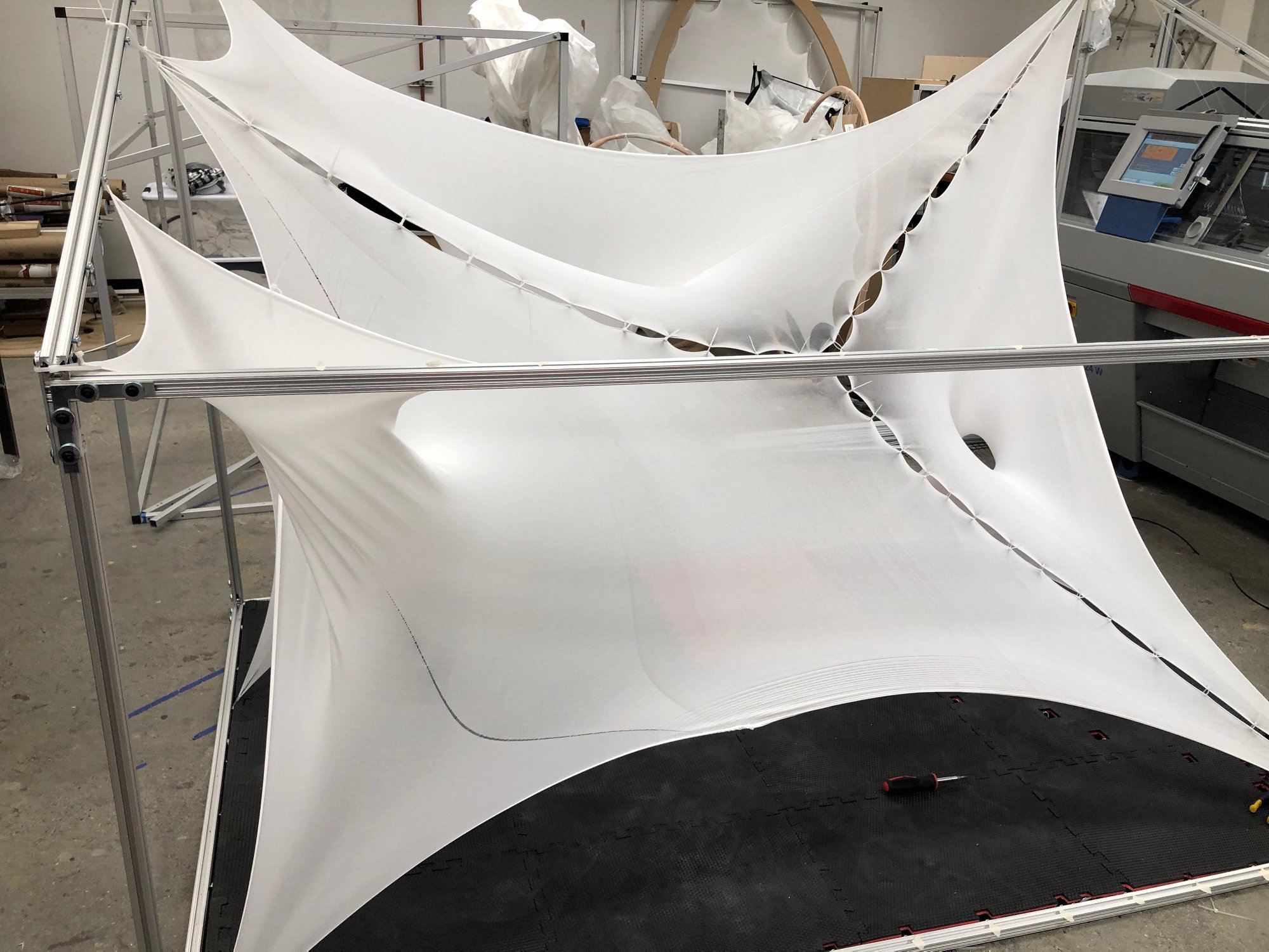
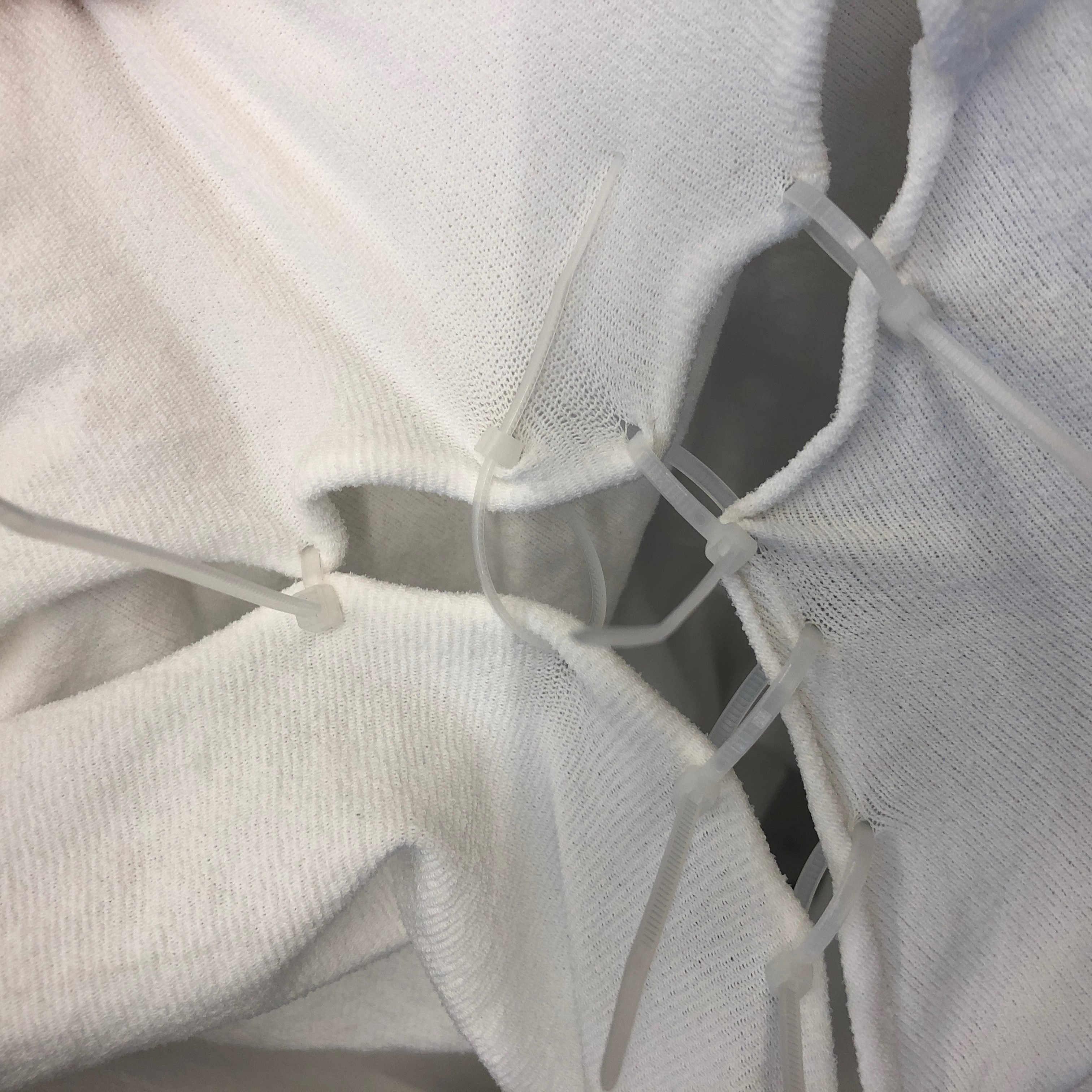
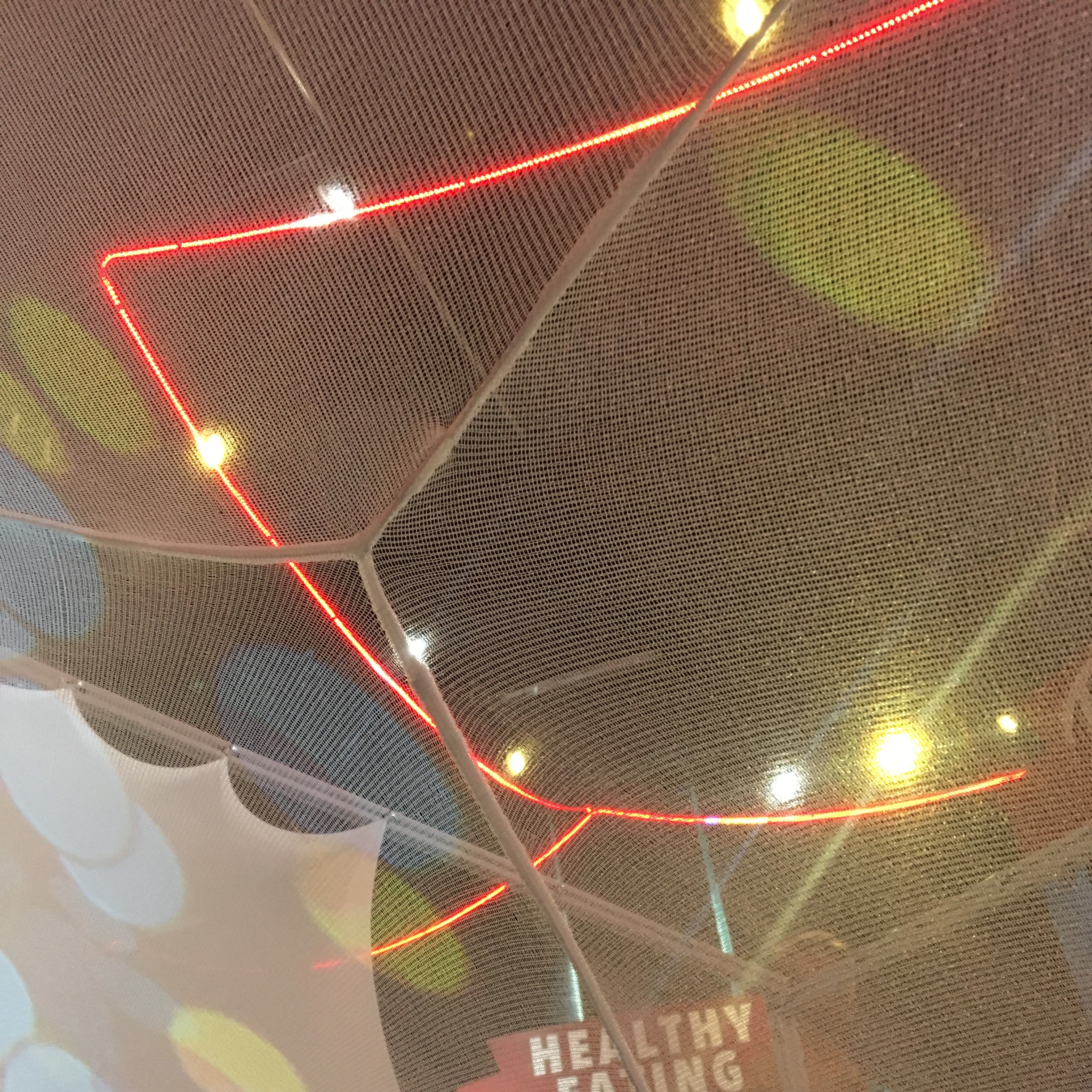
(Above left) photo courtesy of Ruxin Xie. (Above center) photo courtesy of Rachel Skof.
Once the 3D knitting machine spits out the cylinders, they are stretched on the frame designed and constructed by another team. Zipties, in place of traditional sewing pins, hold the textiles together for a final test before they are sewn together on a 5-thread serger, for maximum strength and stretch. This particular design proved tricky because the three cylinders all intersected at a certain point.
Like clear nail polish on a pair of tights, a bottle of Zap-a-gap came in handy to stop any runs. In subsequent iterations, we would decrease the tension in these areas at the Springform Processing stage.
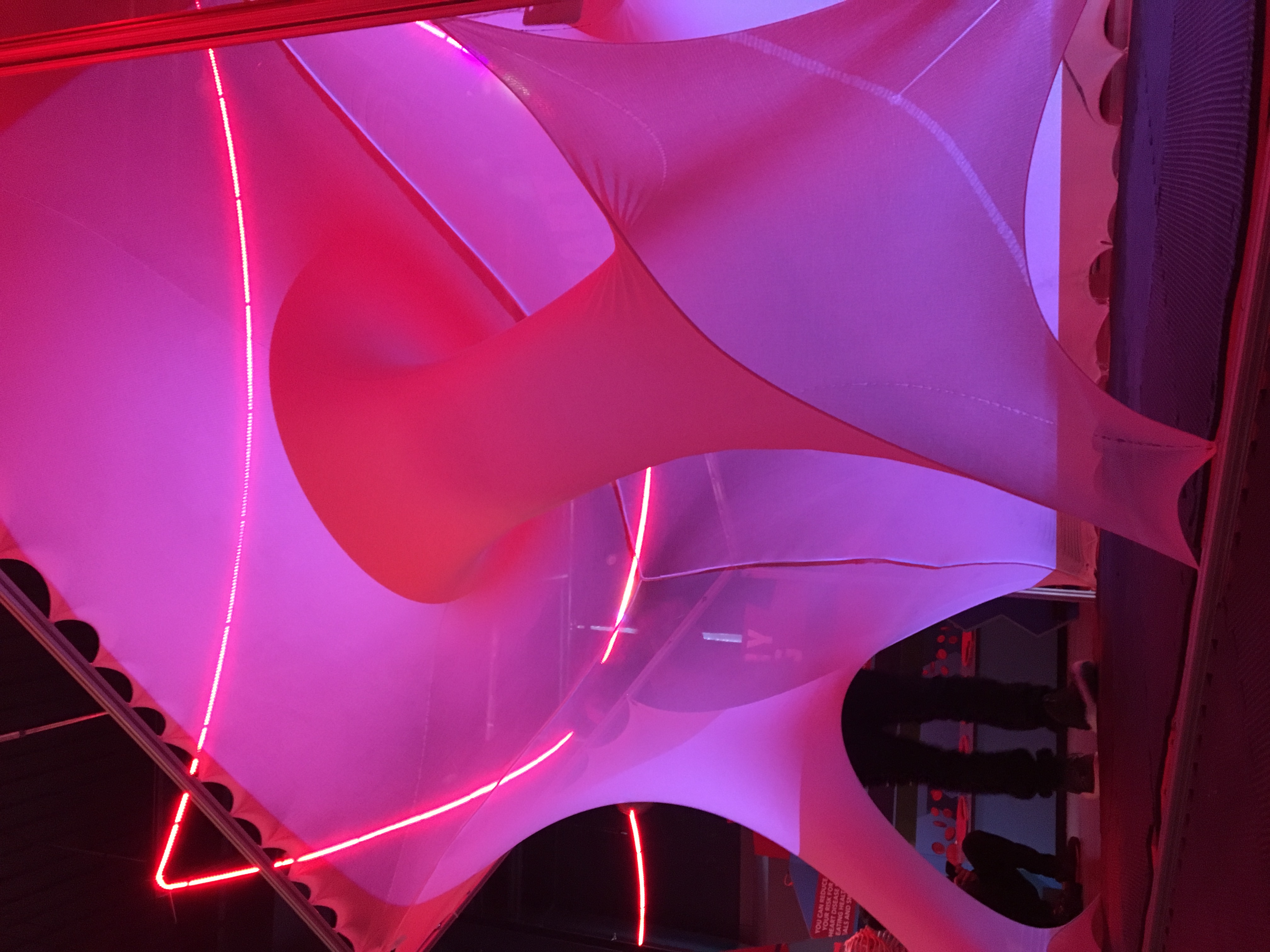
The final Playscape hosted a game that our Interface Team wrote in Open Processing, which reacts to changes in the textile’s surface topography, detected by Microsoft Kinect software.
The neurodivergent-friendly event was held at Science Central in Ft. Wayne, IN, where we tested our Playscape’s intrigue with the children in attendance. Another team designed and executed an evaluation of engagement, observing how often and for how long children interacted with the the playscape or other kids in the process.
(Below) photo courtesy of Patrick Brautigan.
03 mo., winter 2019